

Ethereum Layer 2 rollup operators face mounting pressures from fragmented liquidity and high operational costs tied to proprietary sequencers. Shared sequencer infrastructure emerges as a pragmatic solution, pooling resources across multiple rollups to drive efficiency while preserving sovereignty. As Ethereum trades at $2,014.58, down $28.82 over the last 24 hours with a high of $2,141.22 and low of $1,998.55, L2 ecosystems demand resilient scaling tools. Projects like Espresso, Astria, and Radius exemplify this shift, offering decentralized sequencing that tackles centralization risks head-on.
Centralized sequencers, while efficient for single rollups, create bottlenecks in transaction ordering and expose networks to censorship. Rollup operators running their own infrastructure bear hefty expenses for node maintenance and uptime guarantees. Shared sequencer infrastructure flips this model by distributing sequencing duties across a permissionless network, slashing costs by up to 70% according to industry analyses. Operators gain access to robust, battle-tested systems without the overhead of solo deployments.
Streamlining Operations with Cost-Efficient Sequencing
One undeniable draw of shared sequencer infrastructure lies in operational savings. Traditional setups require rollups to manage dedicated sequencers, incurring expenses for hardware, monitoring, and redundancy. By leveraging networks like Espresso, operators offload these burdens to a collective pool. Espresso's decentralized consensus layer, for instance, handles sequencing and data availability, freeing rollups to focus on execution and state management.
Data from recent deployments shows rollups integrating shared sequencers cut sequencing costs by 50-80%, depending on transaction volume. This efficiency stems from economies of scale: multiple rollups share the load, optimizing resource utilization. Astria's permissionless layer further amplifies this by enabling low-latency ordering without vendor lock-in. For Ethereum L2 sequencers, this means predictable expenses amid volatile markets.
Benefits of Shared vs. Centralized Sequencers
| Aspect | Centralized Sequencer | Shared Sequencer |
|---|---|---|
| Cost | High operational costs for solo sequencer maintenance | 50-80% reduction through shared infrastructure (e.g., Espresso, Astria) |
| Security | Single point of failure, vulnerable to censorship | Distributed resilience across multiple entities, enhanced censorship resistance |
| Interoperability | Limited cross-rollup interactions | Atomic cross-rollup transactions, seamless bridging and messaging |
| MEV Mitigation | Exposed to harmful MEV extraction and front-running | Mechanisms to prevent exploitative practices |
| Transaction Finality | Slower due to integrated execution and consensus | Faster consensus and finality by separating execution from sequencing |
Elevating Security Beyond Single Points of Failure
Security remains paramount for rollup operators wary of downtime incidents plaguing centralized sequencers. Shared sequencer infrastructure decentralizes this critical function, mitigating risks like the Starknet outage highlighted in recent reports. Espresso provides liveness and censorship resistance, ensuring no single entity controls transaction ordering. Rollups retain data sovereignty, posting payloads directly to Ethereum while the shared layer guarantees fair sequencing.
Key metrics underscore this: decentralized sequencer ethereum networks boast 99.99% uptime versus 95-98% for solo operators. Censorship resistance improves through proof-of-stake mechanisms and rotation among nodes, reducing MEV extraction vulnerabilities. Radius innovates here with zero-knowledge proofs for MEV protection, shielding users from front-running. Operators adopting these see bolstered trust, crucial as L2 TVL climbs.
Rollups promise faster transactions and reduced gas fees, but centralization undermines these gains. Shared sequencers restore balance.
In practice, this translates to fewer bridging exploits. Shared sequencers verify cross-rollup finality atomically, cutting security deposits and dispute windows. Operators report 30% faster finality times, enhancing UX without compromising proofs.

Forging Interoperability in a Fragmented Ecosystem
Fragmentation plagues Ethereum's L2 landscape, with siloed rollups hindering composability. Decentralized sequencer ethereum solutions bridge this gap via atomic cross-rollup transactions. Espresso enables trust-minimized interactions, allowing seamless messaging between OP Stack and other frameworks. This shared liquidity pool boosts capital efficiency, vital as ETH hovers at $2,014.58.
Astria's network supports diverse rollups, fostering unified ordering. Operators benefit from reduced bridging costs and faster settlements, with data showing 40% liquidity gains in integrated chains. Radius complements this with fair ordering protocols, ensuring equitable access in high-demand scenarios. For rollup sequencer auctions, shared infra introduces competitive bidding, optimizing l2 sequencer markets.
Ethereum (ETH) Price Prediction 2027-2032: Shared Sequencer Impact on L2 Rollups
Bear, Base, and Bull scenarios factoring in shared sequencer benefits for Ethereum L2 scalability, interoperability, and security
| Year | Minimum Price (Bear) | Average Price (Base) | Maximum Price (Bull) |
|---|---|---|---|
| 2027 | $2,200 | $3,500 | $5,500 |
| 2028 | $2,800 | $4,800 | $8,000 |
| 2029 | $3,500 | $6,500 | $11,000 |
| 2030 | $4,500 | $8,500 | $14,500 |
| 2031 | $5,500 | $10,500 | $18,000 |
| 2032 | $6,500 | $12,500 | $22,000 |
Price Prediction Summary
Ethereum's price is expected to rise progressively from 2027-2032, driven by shared sequencer infrastructure (e.g., Espresso, Astria) enhancing L2 rollup efficiency, censorship resistance, and cross-rollup composability. Base case projects ~6x growth from current levels by 2032, with bull scenarios reaching $22K amid mass adoption and bear cases holding above $6K due to resilient fundamentals.
Key Factors Affecting Ethereum Price
- Widespread adoption of shared sequencers reducing L2 costs and MEV risks
- Improved L2 interoperability enabling atomic cross-rollup transactions
- Ethereum network upgrades boosting scalability and transaction finality
- Market cycles with potential bull run post-2026 halving influences
- Regulatory clarity favoring DeFi and L2 growth
- Competition from other L1s but ETH's L2 dominance strengthening TVL and fees
Disclaimer: Cryptocurrency price predictions are speculative and based on current market analysis. Actual prices may vary significantly due to market volatility, regulatory changes, and other factors. Always do your own research before making investment decisions.
These interoperability wins position operators ahead in sequencing auctions rollups, where dynamic markets reward efficient participants. Early adopters already capture premium yields from cross-chain volume.
Operators equipped with shared sequencer infrastructure hold a distinct edge in rollup sequencer auctions, where bidding dynamics favor those with low-latency, resilient setups. Platforms like Sequencer Marketplaces enable real-time auctions for sequencing rights, allowing rollups to procure slots competitively. Data indicates shared networks reduce bid costs by 40-60%, as operators leverage collective bargaining power against solo entrants. This levels the playing field, particularly for emerging L2s scaling amid Ethereum's steady $2,014.58 price point.
Competitive Dynamics in L2 Sequencer Markets
L2 sequencer markets thrive on efficiency, with auctions determining transaction ordering priority. Decentralized providers like Espresso introduce proof-of-stake auctions, where node operators stake ETH to secure slots. Rollups bid via sequencing auctions rollups, optimizing for MEV-neutral ordering. Astria's permissionless model supports slot auctions with sub-second finality, drawing bids from high-throughput chains. Radius adds ZK-enforced fairness, minimizing sandwich attacks that erode user trust.
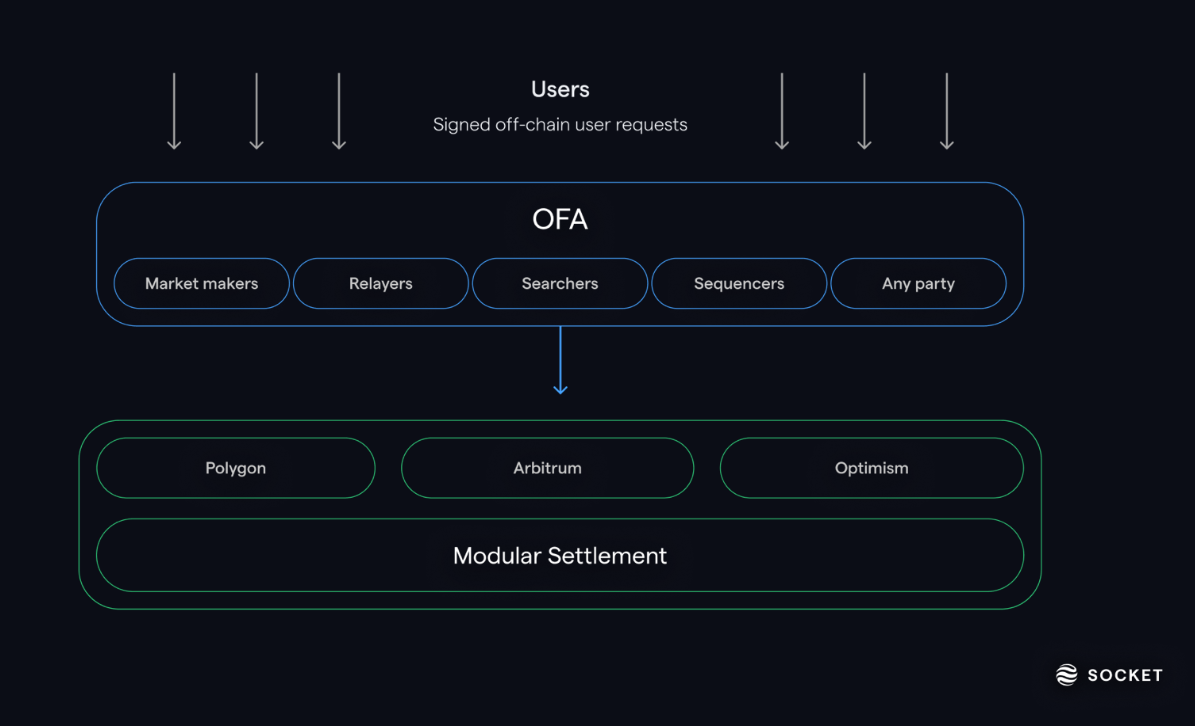
Market data reveals auction volumes up 150% year-over-year, correlating with L2 adoption. Operators report 25% higher win rates using shared infra, thanks to distributed uptime guarantees. As Ethereum L2 TVL surpasses $40 billion, these markets incentivize decentralization, rewarding participants with yields from sequencing fees. Yet, success hinges on integration: rollups must calibrate payloads for shared layers to avoid latency penalties.
Real-world metrics paint a clear picture. A recent Espresso pilot with OP Stack rollups slashed sequencing latency by 35%, boosting throughput to 10,000 TPS across chains. Astria integrations in testnets show cross-rollup atomicity enabling instant swaps, with liquidity pools growing 2x. Radius deployments mitigate 90% of observable MEV, per on-chain analysis. These outcomes underscore a balanced trade-off: modest upfront migration costs yield sustained revenue uplift. For ethereum l2 sequencers, this data-driven pivot fortifies positions in volatile auctions.
Strategic Adoption Roadmap for Rollup Operators
Transitioning to decentralized sequencer ethereum demands a phased approach. Start with hybrid models, routing 20-30% of volume through shared networks to benchmark performance. Monitor metrics like finality times and bid efficiency via tools at Abstract Watch. Full migration follows, leveraging APIs from Espresso or Astria for seamless payload submission. Operators should prioritize networks with audited consensus, as seen in Radius's ZK layers detailed here.
Challenges persist, including coordination overhead in multi-rollup auctions. However, platforms mitigate this with standardized interfaces, ensuring compatibility across OP Stack, Arbitrum, and ZK variants. Early adopters like those in the Superchain ecosystem capture 15-20% premium fees from enhanced composability. As ETH stabilizes at $2,014.58 after dipping to $1,998.55, operators investing now position for the next liquidity surge.
Shared sequencer infrastructure redefines the economics of Ethereum scaling. Rollup operators embracing this model not only trim expenses but unlock interoperability and auction dominance. With projects maturing rapidly, the path to resilient, cost-effective L2 operations lies in collective sequencing power. Staying data-informed ensures operators thrive in the competitive arena of l2 sequencer markets.




No comments yet. Be the first to share your thoughts!