
7 Best AI Music Sequencer Marketplaces for 2026
The 2026 AI music sequencer market has matured into a specialized ecosystem where distinct platforms cater to specific production workflows. This roundup evaluates seven concrete marketplaces, prioritizing tangible tools like AIVA and Soundraw over abstract categories to help you find the right fit for your studio.
1. AIVA for cinematic scoring
AIVA is the industry standard for composers needing precise emotional control. It allows users to edit individual notes in a piano roll interface, offering granular control that most "black box" generators lack. This makes it ideal for film scoring, game soundtracks, and classical compositions where structural integrity matters more than novelty.

2. Soundraw for content creators
Soundraw focuses on customization for video editors. Instead of generating a fixed track, it creates loops that you can trim, fade, and structure to match video cuts perfectly. The platform offers extensive genre filtering and allows you to remove specific instruments (like drums or bass) to create custom mixes for background use.
3. Suno for full song generation
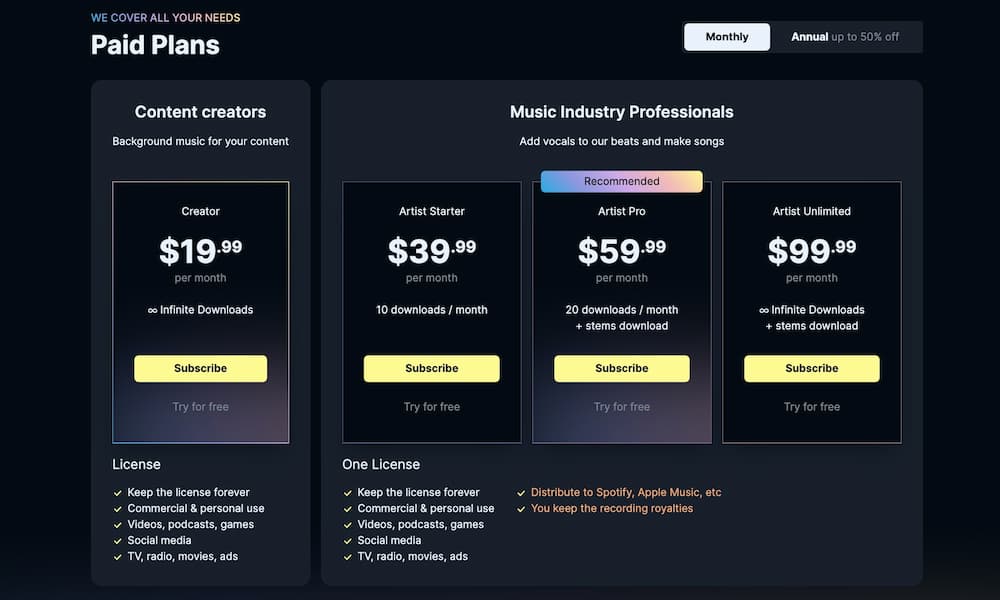
Suno pushes the boundary of AI composition by treating prompts like lyrical directives, producing full songs with distinct verses, choruses, and high-fidelity vocals. Its advanced generative model captures complex musical structures, allowing producers to remix or extend tracks with surprising coherence. This platform serves as a creative sandbox for artists seeking to prototype complete musical arrangements rather than simple ambient loops.

4. Udio for high-fidelity audio
Udio acts as a high-end studio assistant, focusing on audio quality and structural complexity. It excels at generating realistic instrumentals and vocal performances that rival human recordings. Users can extend tracks indefinitely, making it perfect for creating long-form ambient pieces or detailed musical demos that require realistic timbre.

5. Ecrett Music for video creators
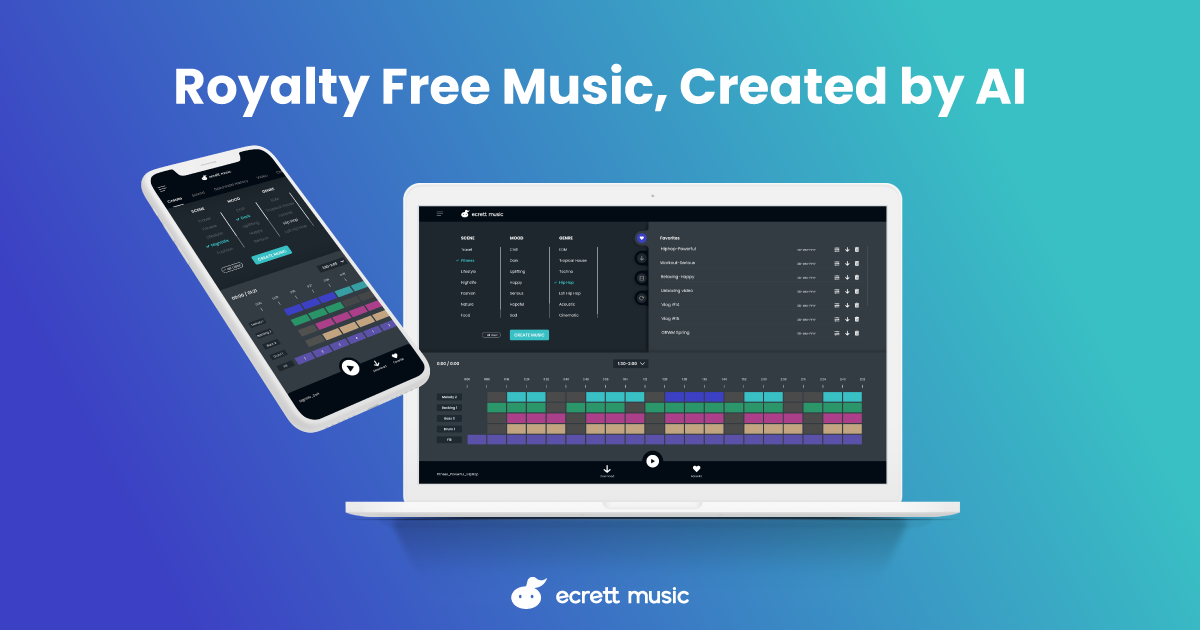
Ecrett Music acts like a mood ring for your video projects, translating emotional cues into royalty-free soundtracks without requiring music theory knowledge. Users select themes like "inspirational" or "dark" to generate unique loops tailored for YouTube intros or corporate presentations. This tool eliminates licensing headaches, letting creators focus on storytelling while the AI handles the background score.
6. Mubert for streaming and podcasts
Mubert is designed for continuous, royalty-free background music. It generates infinite streams based on genre and mood tags, making it ideal for live streams, podcasts, and background ambience in public spaces. The platform handles licensing automatically, removing the legal friction often associated with AI-generated content.

7. Boomy for rapid publishing
Boomy simplifies the path to publication by allowing users to create tracks in minutes and distribute them directly to major streaming platforms like Spotify and Apple Music. It is geared towards non-musicians who want to release music without learning production software, handling the mixing, mastering, and distribution logistics automatically.
How to choose the right AI sequencer
Picking an AI music platform is less about finding the "best" tool and more about matching the engine to your workflow. A tool like Suno dominates for quick, vocal-heavy tracks because its ease of use is unmatched, but it lacks the granular control a producer needs for commercial scoring. Conversely, platforms like Mubert offer royalty-free instrumental generation in seconds, making them ideal for content creators who need background music without legal headaches.
Before committing to a subscription, check three specific criteria. First, verify the licensing terms for commercial use; some generators retain ownership or require attribution. Second, evaluate stem quality. If you plan to remix or layer the output, ensure the platform exports isolated tracks (drums, bass, melody) rather than just a flat stereo file. Third, confirm export formats. Standard WAV or MP3 is fine for demos, but professional DAW integration often requires high-resolution stems or MIDI data.
Use this checklist to narrow your options before reviewing the detailed comparisons below.
-
Licensing: Does the plan cover commercial monetization (YouTube, Spotify, ads)?
-
Stem Access: Can you download isolated tracks for further editing?
-
Export Format: Does it support WAV/MIDI compatible with your DAW?
-
Genre Fit: Does the model specialize in your target style (e.g., cinematic, lo-fi, pop)?
Licensing and commercial use rights
Buying an AI-generated track is not the same as buying a copyright. Most marketplaces operate on a license basis, meaning you rent the right to use the music rather than owning the composition itself. This distinction matters most when you are monetizing content on platforms like YouTube or Spotify.
Always verify the commercial license terms before using AI-generated stems in monetized content.
Royalty-free does not mean free of cost. It simply means you pay once and avoid recurring royalty payments. However, many platforms restrict redistribution. You typically cannot resell the raw AI track as your own product. You must integrate it into a larger project, such as a video, podcast, or game.
Ownership rights vary by provider. Some platforms grant full commercial rights with a subscription, while others require a higher-tier plan for exclusive usage. Read the fine print to ensure your intended use case—such as background music for a branded ad—is covered.
Frequently asked questions about AI music
What is the best AI music generator in 2026? Suno remains the most widely used platform for general users due to its intuitive interface and high-quality vocal generation. For instrumental tracks and background music, Mubert is a strong alternative, generating royalty-free content in under ten seconds. Udio also competes closely for high-fidelity audio production.
Can I use AI-generated music commercially? Licensing depends entirely on your subscription tier. Most platforms, including Suno and Udio, grant commercial rights only on paid plans. Free tiers typically restrict usage to non-commercial sharing. Always review the specific terms of service for each tool to ensure you hold the necessary rights for monetization.
How does AI music affect human artists? AI tools streamline the production workflow but do not replace human creativity. Artists use these platforms for rapid prototyping, sampling, and sound design rather than final composition. The technology serves as an instrument that expands creative possibilities, allowing creators to experiment with genres and arrangements quickly.
Where to buy AI music gear and tools
AI generators handle the composition, but you still need a production environment to shape, mix, and master your tracks. The right hardware and software stack turns raw AI stems into a polished, release-ready song. This section highlights concrete tools that pair well with platforms like Suno, Udio, and Mubert.
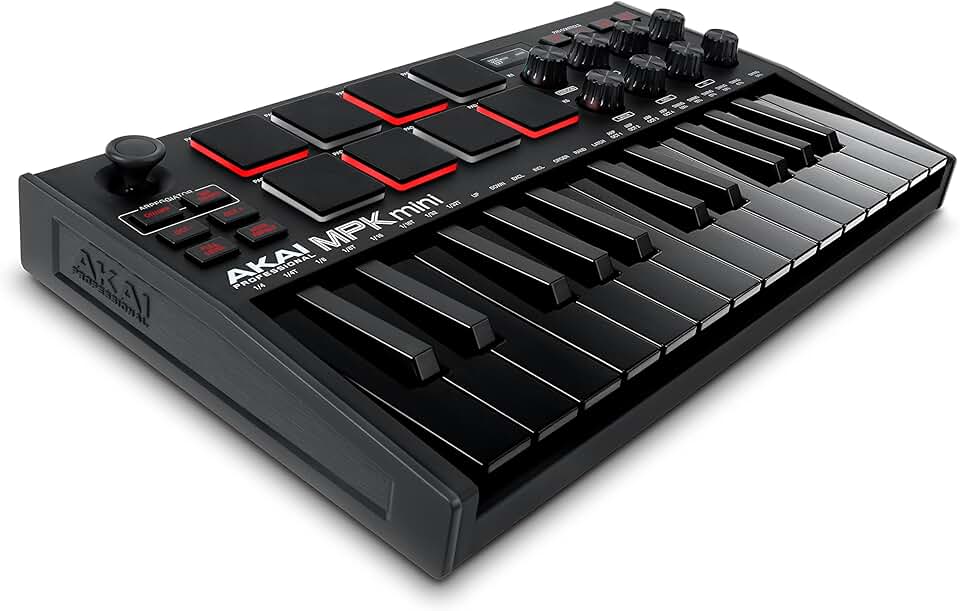
Start with a digital audio workstation (DAW) that supports stem import and MIDI export. For hardware, a compact MIDI keyboard with velocity sensitivity helps you refine AI-generated melodies. Studio monitors and a dedicated audio interface are non-negotiable for accurate mixing. If you are working with vocal stems, a high-quality condenser microphone ensures any additional recording blends seamlessly with the AI elements.
AmazonProductGrid is the best place to find these essentials. Below are curated recommendations for core gear and efficiency accessories that support the modern AI music workflow.


As an Amazon Associate, we may earn from qualifying purchases.
No comments yet. Be the first to share your thoughts!