

Why AI music generation matters for loops
The days of relying solely on static sample packs are ending. AI music generation has shifted the producer’s workflow from digging through folders to generating bespoke loops on demand. This isn't about replacing the producer; it's about expanding the palette with infinite variations that fit specific BPMs and keys instantly.
For producers looking to sell on marketplaces, this shift is critical. Buyers no longer want generic, overused loops. They want unique textures that match their exact project needs. AI tools allow you to create royalty-free, commercially licensable loops that stand out in a crowded catalog.
Instead of spending hours tweaking a synth patch, you can generate dozens of variations in minutes. This speed allows you to test more ideas and deliver higher quality assets to your customers. The goal is to use AI as a creative engine, not a crutch.
5 Best AI Music Generation Tools for Producers in 2026
The landscape of AI music generation has evolved significantly by 2026, offering producers powerful tools that integrate seamlessly into modern workflows. This roundup highlights five concrete AI music generation platforms that deliver professional-grade results for serious creators.
1. Suno for full-track composition
Suno acts as a complete songwriting partner, generating polished, radio-ready tracks from simple text prompts. It excels at creating cohesive vocal melodies and lyrical structures that feel human-made. Producers use it to rapidly prototype full songs, capturing the emotional arc of a track without needing traditional instrumentation skills. This tool bridges the gap between idea and finished demo.

2. Udio for high-fidelity stems
Udio delivers studio-quality audio with remarkable clarity, making it ideal for producers needing pristine source material. Its strength lies in generating distinct, isolated stems that retain high fidelity across frequencies. This allows for precise mixing and mastering downstream. The platform handles complex arrangements with ease, providing a robust foundation for electronic and pop productions that demand sonic excellence.

3. OpenMusic AI for royalty-free control
OpenMusic AI offers granular control over musical elements, ensuring every generated piece is royalty-free and safe for commercial use. Producers appreciate the ability to tweak specific parameters like tempo, key, and instrumentation without legal concerns. This predictability makes it a reliable workhorse for background scoring and content creation where clearance issues could otherwise halt production workflows.

4. Gemini Lyria for visual-to-audio
Gemini Lyria transforms visual inputs into synchronized audio landscapes, creating a unique cross-modal experience. This feature allows producers to generate music directly from images or video frames, matching mood and pacing visually. It opens new creative avenues for multimedia projects, where audio needs to perfectly mirror visual storytelling. The integration streamlines the workflow for video editors and content creators.
5. Beatoven AI for background tracks
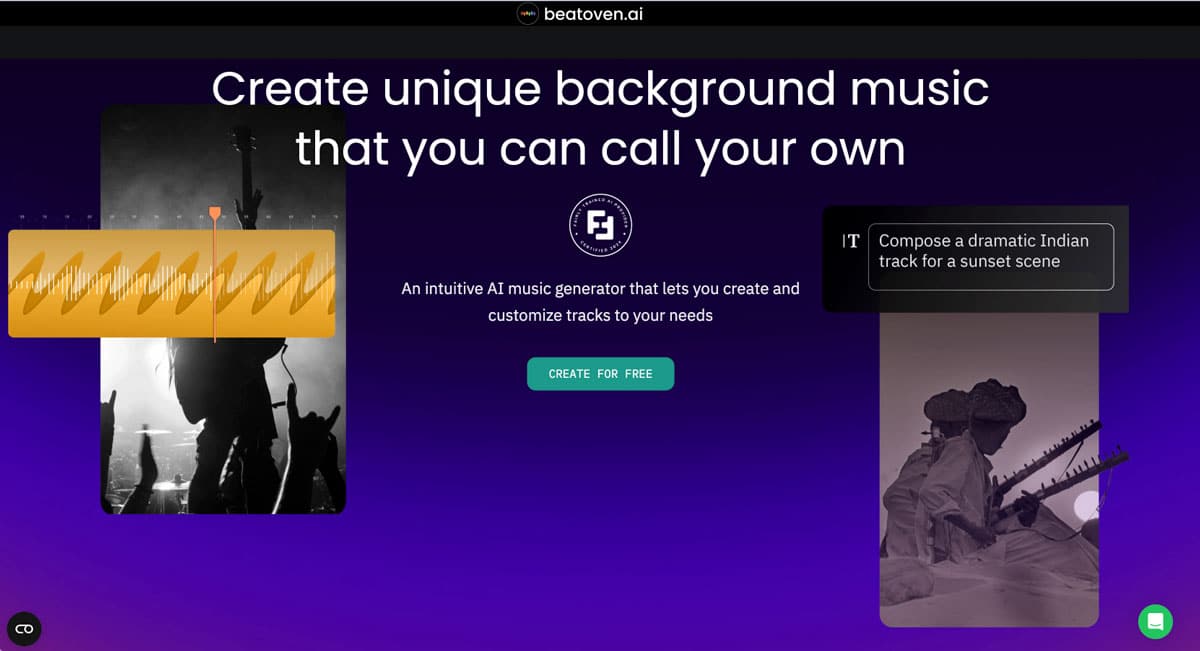
Beatoven AI specializes in creating adaptive background music that adjusts dynamically to video length and mood. It is perfect for podcasters and YouTubers who need non-intrusive, looping tracks that enhance content without overpowering dialogue. The tool’s ability to generate seamless loops ensures consistent audio quality throughout long-form videos, making it an essential asset for digital content production.
Compare AI music generation tools
Choosing the right AI music generation platform depends on your specific production needs. Some tools excel at creating full songs with lyrics, while others focus on royalty-free background tracks for video or podcasts. The table below outlines the core differences in pricing models, output formats, and commercial rights for five leading options.
These platforms vary significantly in their approach to audio quality and genre specialization. For instance, Suno and Udio are known for generating complete vocal tracks, whereas Beatoven.ai specializes in customizable background music for content creators. OpenMusic AI offers extended track lengths, making it suitable for longer-form content.
- "Starter kit for beginners"
- "Popular among content creators"


As an Amazon Associate, we may earn from qualifying purchases.
Questions about AI music generation
Using AI music generation in commercial projects requires understanding the legal and technical boundaries of these tools. Producers often ask whether generated loops can be used in released tracks, how the quality compares to human-made samples, and if major platforms will accept the content.
Can I use AI-generated loops in commercial releases?
Most platforms like Suno and Udio grant commercial rights only on paid subscriptions. Free tiers usually retain ownership for the platform. Always check the specific Terms of Service for tools like OpenMusic AI or Beatoven.ai before uploading to Spotify or Apple Music.
How does loop quality compare to traditional samples?
Modern AI music generation tools produce high-fidelity stems that often pass quality checks in DAWs. However, artifacts can appear in complex transitions. It is wise to audition loops in your specific project context. Tools like MusicAI offer editing features to clean up minor glitches.
Will streaming platforms flag my track as AI?
Major distributors are beginning to require AI disclosure. While they rarely block AI content, failing to declare it can lead to takedowns. Use AI responsibly by labeling your metadata. This ensures your work remains accessible on all major streaming services.
No comments yet. Be the first to share your thoughts!