
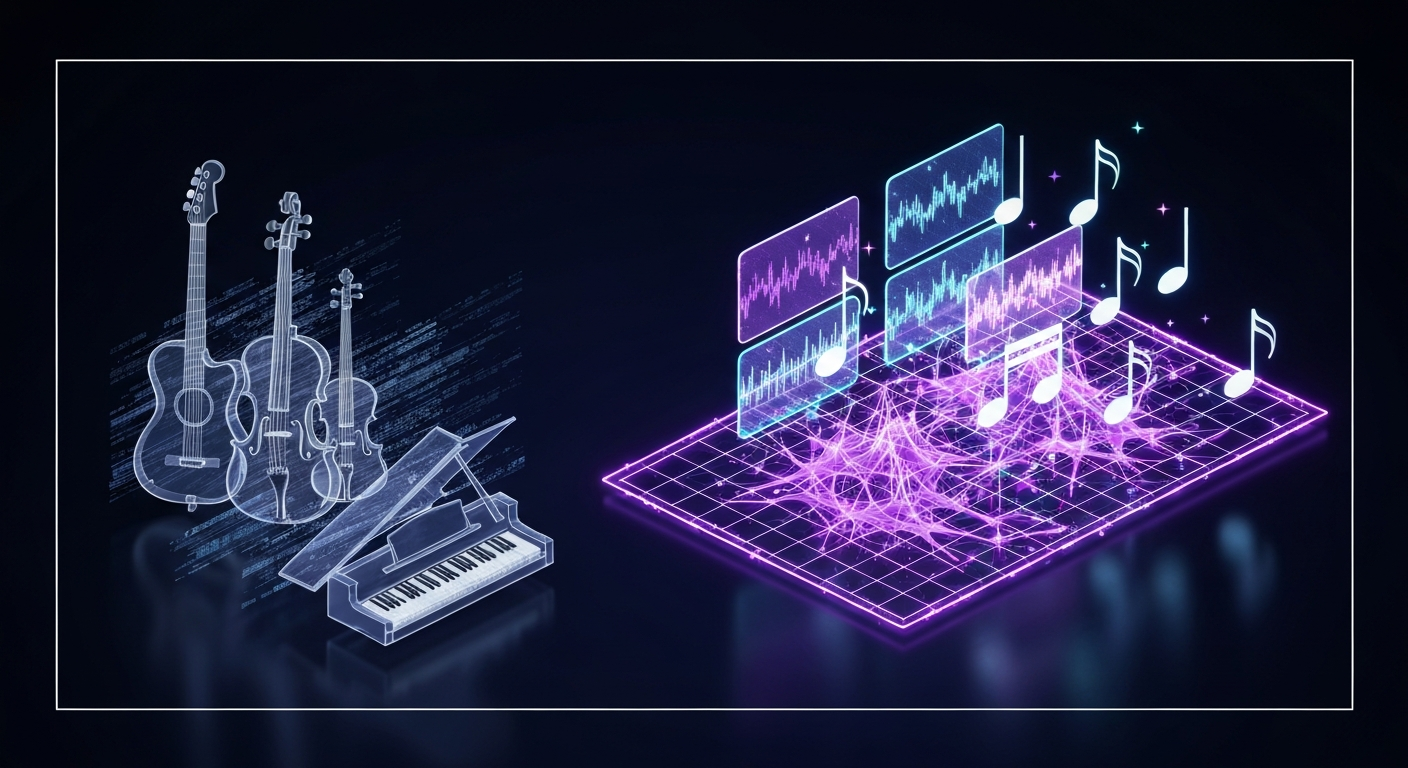
What makes a good AI sequencer marketplace
Finding the right AI music sequencer marketplace requires looking past the marketing hype to evaluate three practical pillars: output quality, format flexibility, and licensing clarity. A platform might generate impressive audio, but if it doesn’t integrate into your existing Digital Audio Workstation (DAW) workflow, the tool is less useful than it appears.
The most significant differentiator is whether the marketplace sells finished audio stems or editable MIDI sequences. MIDI data allows you to change instruments, adjust timing, and reharmonize melodies within your own project. As noted by LANDR, AI MIDI tools generate musical patterns and chord progressions as editable data, which is essential for producers who need to maintain creative control over the final arrangement.
Finally, commercial licensing clarity is non-negotiable. You need to know exactly what rights you are purchasing. Can you use the generated tracks in a commercial release? Do you need to attribute the AI tool? A good marketplace provides clear terms that protect your intellectual property, ensuring that your music remains yours to distribute and monetize without legal ambiguity.
Top AI music sequencer marketplaces
The market for an AI music sequencer marketplace has fragmented into distinct tools, each optimized for a specific stage of production. Some platforms prioritize rapid beat generation for social content, while others focus on granular MIDI editing for professional composition. Choosing the right platform depends on whether you need a finished track or editable musical data.
Amped Studio
Amped Studio operates as a browser-based digital audio workstation (DAW) that integrates AI generation directly into the workflow. It is particularly useful for producers who need to start a project immediately without installing heavy software. The platform allows users to generate beats and chord progressions, which can then be mixed and arranged within the same interface.
The primary advantage here is the ability to export MIDI data. This means the AI-generated ideas are not locked as static audio files; they can be dragged into other DAWs like Ableton Live or FL Studio for further refinement. This bridges the gap between quick idea generation and detailed music production.
LANDR
LANDR has expanded beyond its roots in automated mastering to include a robust suite of AI MIDI tools. These tools are designed to generate musical patterns, chord progressions, and melodies in the form of MIDI data. This approach is ideal for producers who want to use AI as a collaborative partner rather than a replacement for their own creativity.
The generated MIDI files are compatible with most major DAWs, allowing for deep editing. Users can tweak note velocity, timing, and pitch to fit their specific artistic vision. This makes LANDR a strong choice for those who need structural musical ideas that can be easily integrated into existing projects.
ElevenLabs
ElevenLabs has entered the music space with a dedicated marketplace that focuses on the commercialization of AI-generated tracks. While their core technology is known for voice synthesis, their music tools allow creators to produce original tracks that can be sold, remixed, or licensed directly through the platform.
This marketplace is distinct because it addresses the monetization aspect of AI music. It provides a built-in infrastructure for distribution, which is often a barrier for independent producers. If your goal is to create and sell AI-generated music rather than just use it for personal projects, this platform offers a direct path to revenue.
Gearspace Marketplace
Gearspace hosts a community-driven marketplace that includes a variety of AI models and tools. This includes text-to-music sample generators, voice swap models, and stem separation tools. The platform serves as a hub for more technical users who want to experiment with different AI models rather than relying on a single proprietary ecosystem.
The diversity of tools available here allows producers to pick and choose the best AI solution for each specific task. Whether you need to isolate vocals from a track or generate unique samples from text prompts, this marketplace offers a wide range of options for the technically inclined producer.
| Platform | Primary Focus | Key Output | Commercial Rights |
|---|---|---|---|
| Amped Studio | Browser-based DAW | MIDI + Audio | Standard License |
| LANDR | MIDI Generation | MIDI Data | Standard License |
| ElevenLabs | Music Distribution | Audio Tracks | Marketplace Licensing |
| Gearspace | Tool Aggregation | Various AI Models | Varies by Model |
Integrating AI tools into your DAW
The best AI music sequencer marketplace is the one that fits your existing workflow without friction. When you select a platform, the primary consideration is not just the quality of the generated audio, but how easily the output integrates with your Digital Audio Workstation (DAW). A tool that generates impressive melodies is useless if you cannot import them into your project without complex conversion steps.
Most modern AI platforms prioritize MIDI compatibility because it preserves the editable nature of the composition. When an AI generates a chord progression or melody, it typically exports as MIDI data rather than static audio. This allows you to change the instrument sound, adjust the tempo, or modify individual notes within your DAW. For example, platforms like LANDR offer AI MIDI tools that generate patterns specifically designed for import into standard sequencing environments. This approach keeps your production flexible, allowing you to refine the AI's suggestions rather than being locked into a fixed audio file.
File format support is equally critical. While MIDI is the standard for melodic and harmonic data, some AI tools focus on texture, drums, or ambient layers, which may require WAV or MP3 exports. Ensure the marketplace you choose supports the specific formats your DAW handles natively. If a tool only offers proprietary file types, you will face unnecessary hurdles during the mixing stage. Prioritize platforms that offer direct integration or standard export options, minimizing the time spent on file management and maximizing the time spent creating music.
Hardware and Software Bundles
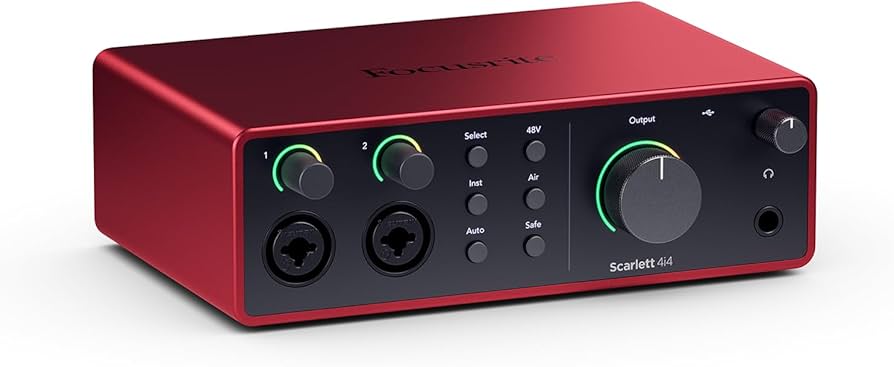
Building an AI music sequencer workflow requires more than just a subscription to a generative platform. While the software does the heavy lifting of pattern generation and stem separation, your physical setup determines how quickly you can iterate on those ideas. The most effective setups pair intuitive MIDI controllers with reliable audio interfaces, creating a feedback loop between your physical hands and the AI's output.
For producers looking to bridge the gap between digital generation and tactile control, specific hardware bundles offer the best value. These tools are designed to integrate seamlessly with popular DAWs, allowing you to record, edit, and refine AI-generated MIDI data without fighting compatibility issues. The following products represent the current standard for hardware that supports modern AI-assisted production.


As an Amazon Associate, we may earn from qualifying purchases.
When selecting gear, prioritize controllers with DAW-specific integration. This allows the hardware to map directly to your AI sequencer's parameters, such as tempo, key, and generative density, without needing to navigate complex software menus. Similarly, an audio interface with sufficient I/O ensures you can record external instruments alongside AI-generated stems, keeping your production process fluid and professional.
FAQ: AI Music Sequencer Marketplace Rights and Tech
Can I use AI-generated beats for commercial projects? Most AI music sequencer marketplace platforms now allow commercial licensing, but terms vary significantly. Always review the specific license agreement for the track or MIDI data you purchase. Some platforms grant full ownership, while others retain limited rights for the creator.
Who owns the copyright to AI-generated music? Copyright law for AI content is evolving. In many jurisdictions, fully AI-generated works may not qualify for traditional copyright protection. However, if you make significant human edits or arrangements, those specific contributions may be protected. Check current local regulations before relying on exclusive rights.
Do I need to credit the AI tool in my releases? Platform policies dictate attribution requirements. Some marketplaces require you to disclose the use of AI tools, while others do not. When selling beats or stems, ensure you comply with the seller’s guidelines to avoid takedowns or account restrictions.
Can I resell or remix AI-generated tracks? This depends on the license type. Standard licenses often permit remixing and resale within certain limits, but exclusive rights may restrict these actions. Always verify the resale permissions attached to the specific asset before including it in your own commercial releases.
How do I verify the authenticity of AI music on a marketplace? Look for platforms that provide transparency about the generation process and offer clear metadata. Some marketplaces use watermarking or blockchain verification to prove origin. Choose established marketplaces with robust content moderation to minimize the risk of infringing or low-quality assets.**
No comments yet. Be the first to share your thoughts!