

In the pulsating core of Ethereum’s Layer 2 ecosystem, dynamic sequencing auctions are igniting a revolution, handing blockchain developers the reins to transaction ordering through real-time bidding wars. Forget static sequencers; these mechanisms let rollup operators and node providers compete fiercely for sequencing rights, slashing MEV abuses while turbocharging network throughput. As someone who’s dissected L2 economics for over a decade, I see this as the bridge from centralized bottlenecks to truly decentralized infra plays.

TimeBoost: Where Time Meets Bidding Precision
The TimeBoost auction stands out as a hybrid powerhouse, blending time-based ordering with explicit bids to dictate execution priority. Imagine transactions ranked not just by gas fees, but by mathematically crafted scores that factor in latency races and continuous bidding streams. This setup promises revenue spikes and welfare boosts for L2s, yet deployments whisper warnings of centralization risks and execution hiccups. For devs building dApps on rollups, grasping TimeBoost means unlocking real-time sequencer insights to predict block inclusion with surgical accuracy.
Empirical dives reveal its edge in managing order flow auctions, but practical tweaks are vital. RollupBoost echoes this vibe, auctioning L2 block orders to foster competition. Developers eyeing Ethereum L2 auction tools should prototype TimeBoost integrations early, as they redefine sequencer profitability in shared infra markets.
TimeBoost Advantages
-
Hybrid Continuous-Discrete Bidding: Combines time-based ordering with explicit bidding for flexible execution priority allocation in real-time auctions.
-

Score-Based Transaction Ranking: Uses mathematically defined scores to rank transactions, effectively managing latency races and priority.
-

MEV Mitigation: Priority allocation reduces Miner Extractable Value extraction through structured auction mechanisms.
-
Higher L2 Welfare: Empirical analyses show revenue and welfare gains for Layer 2 networks, despite centralization risks.
Syndicate’s Modular Arsenal for Custom Sequencing
Syndicate flips the script with plug-and-play sequencing modules, letting devs mix permission controls, ordering logic, auctions, and cross-chain atomicity like Lego bricks. Picture auction modules handling bids dynamically while ordering modules enforce fairness, all via smart contracts. This modularity empowers blockchain developer sequencer markets, where you tailor auctions to your rollup’s quirks, from DeFi frenzy to NFT drops.
In my view, Syndicate’s approach undervalues no more; it’s a medium-risk bet on customizable infra that scales with Ethereum’s rollup boom. Pair it with Espresso’s shared sequencing auctions, and you’ve got multi-L2 efficiency without the solo sequencer drag.

Sealed-Bids and Defenses Against Auction Adversaries
Cross-chain sealed-bid auctions bring stealth to the table, running sensitive logic in TEE-backed chains for privacy, then settling publicly. No trusted middlemen, just scalable security. Meanwhile, adversarial sequencing looms large: spoof bids and gas censorship threaten distributed auctions. Counter with crypto commitments and game-theoretic shields, ensuring robust sequencer bid predictions.
These innovations address MEV’s dark side head-on. Parallel execution amps this further, letting non-conflicting txs fly simultaneously in auctions, juicing blockspace markets. Devs, integrate these to fortify your L2s against attacks while chasing VanEck’s $1T valuation horizon by 2030.
Scalable off-chain auctions sidestep Ethereum’s gas bottlenecks, handling high-frequency bids with off-chain compute before on-chain settlement. This is gold for dynamic sequencing auctions, where speed trumps everything in competitive L2 environments. Platforms like Flashbots’ MEV-Boost exemplify this, running off-chain auctions to tame gas volatility and supercharge DeFi order flow. For blockchain developers, these marketplaces aren’t just tools; they’re the new normal for real-time sequencer insights, revealing bid patterns that predict sequencer dominance.
Blockspace Markets in Overdrive
Real-time blockspace marketplaces flip MEV auctions from chaotic scrambles to structured competitions. Bidders vie for slots via sealed envelopes or continuous doubles, stabilizing fees while maximizing utilization. Lighthouse’s framework, spotlighted at Sequencing Day, pushes this further with practical rollup tweaks. I’ve analyzed enough L2 rollouts to know: ignoring these means leaving revenue on the table. Devs should monitor Pod Network’s take on Espresso’s multi-L2 auctions, where shared infra cuts costs by 40-60% in simulations.
Comparison of Key Auction Mechanisms
| Mechanism | Strengths | Risks | L2 Fit |
|---|---|---|---|
| TimeBoost | Hybrid bidding with score ranking, revenue and welfare gains | Centralization, unreliable execution | Excellent for rollup block ordering |
| Syndicate | Modular auctions, customizable ordering and cross-chain coordination | Implementation complexity | Highly flexible for tailored L2 sequencing |
| Sealed-Bid | TEE privacy, cross-chain scalability without trusted parties | TEE vulnerabilities | Ideal for privacy-focused cross-chain L2s |
| MEV-Boost | Off-chain auctions, fee stabilization, real-time blockspace marketplaces | Builder centralization | Proven Ethereum model, adaptable to L2 MEV management |
| Espresso | Shared sequencing rights for multiple L2s | Multi-L2 coordination challenges | Optimized for shared L2 ecosystems |
VanEck’s bold $1T ETH L2 prediction by 2030 hinges on such efficiencies, evaluating sequencing across execution, security, and economics. Undervalued infra like Rise Chain’s gigagas L2s, with onchain CLOBs, signal the performance leap ahead.
Mastering L2 Ordering Auctions: A Blockchain Developer’s Guide
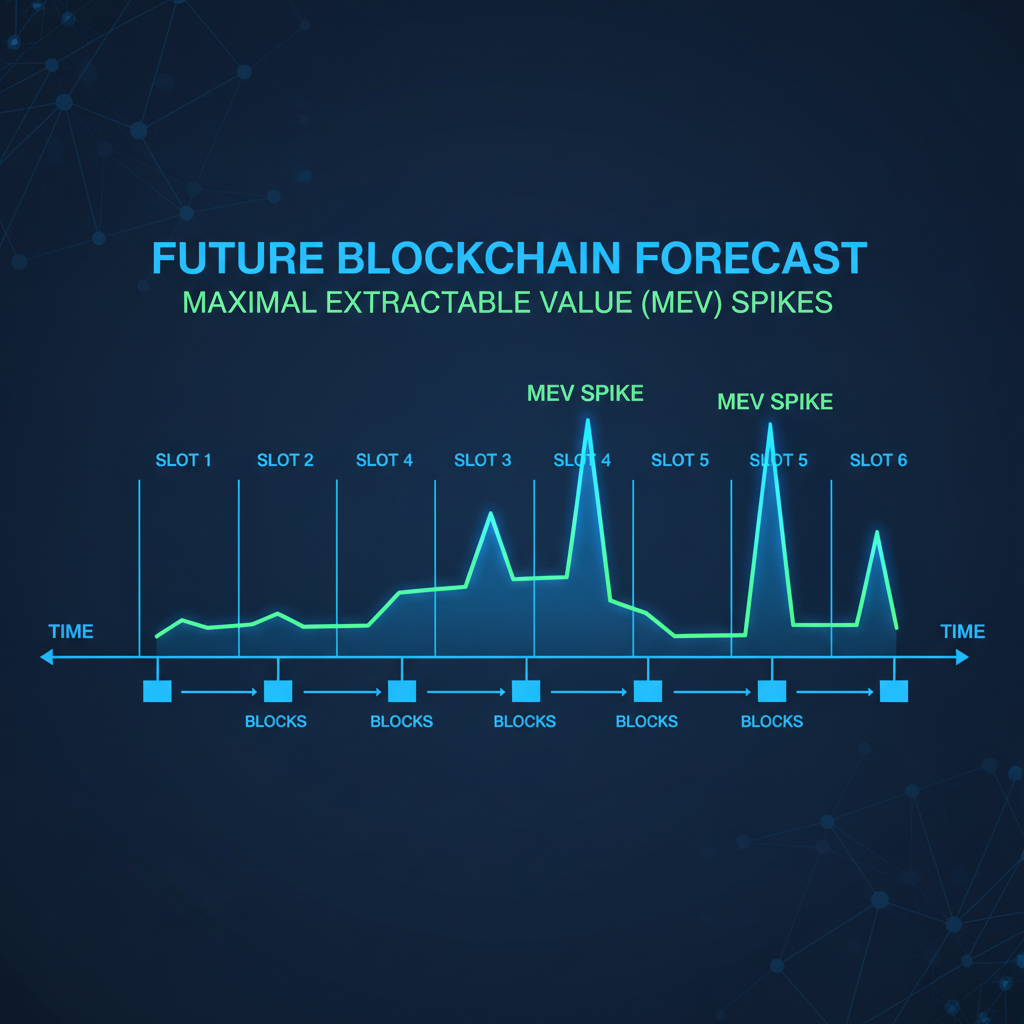
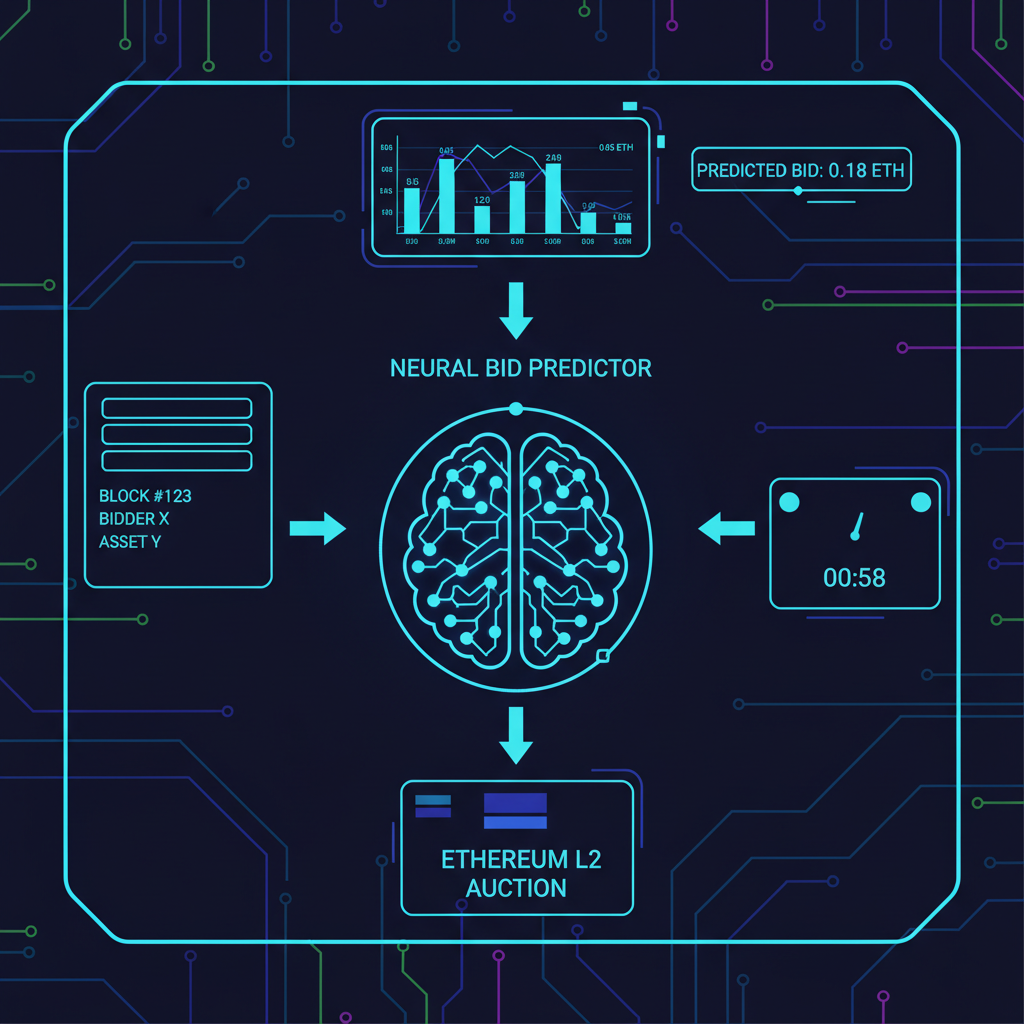


Adversarial threats persist, from spoofing in order flow auctions to private builder dynamics skewing probabilities. Defensive layers, like cryptographic commitments, make these auctions resilient. For dApp devs, this means auditing sequencing stacks rigorously, perhaps via Spire Labs’ rollup resources or Archetype’s sequencer deep-dive.
Syndicate SEQ (SEQ) Price Prediction 2027-2032
Projections incorporating volatility bands, Ethereum L2 sequencer market growth, and VanEck’s $1T L2 valuation trajectory by 2030 (2026 baseline: ~$1.20)
| Year | Minimum Price | Average Price | Maximum Price | YoY % Change (Avg) |
|---|---|---|---|---|
| 2027 | $0.85 | $2.10 | $4.50 | +75% |
| 2028 | $1.20 | $3.80 | $8.00 | +81% |
| 2029 | $2.00 | $6.50 | $14.00 | +71% |
| 2030 | $3.50 | $11.00 | $25.00 | +69% |
| 2031 | $5.00 | $16.00 | $35.00 | +45% |
| 2032 | $7.00 | $22.00 | $50.00 | +38% |
Price Prediction Summary
Syndicate SEQ is forecasted to see robust growth through 2032, fueled by dynamic sequencing auctions, TimeBoost mechanisms, and Syndicate’s modular solutions in the Ethereum L2 ecosystem. Average prices could climb from $2.10 in 2027 to $22.00 in 2032 (18x increase), with bullish maxima up to $50 amid $1T L2 market expansion, while minima account for bearish cycles and competition.
Key Factors Affecting Syndicate SEQ Price
- Rapid adoption of real-time sequencing auctions (TimeBoost, Syndicate modules)
- VanEck’s $1T Ethereum L2 valuation by 2030 driving sequencer token demand
- MEV auction innovations and parallel execution enhancing network efficiency
- Regulatory developments favoring L2 scalability and public goods contributions
- Crypto market cycles, Ethereum upgrades, and competition from Espresso/TimeBoost tokens
- Technological advancements in cross-chain auctions and adversarial sequencing defenses
Disclaimer: Cryptocurrency price predictions are speculative and based on current market analysis.
Actual prices may vary significantly due to market volatility, regulatory changes, and other factors.
Always do your own research before making investment decisions.
Sequence’s Web3 push adds auction resale markets and SDKs for gaming engines, embedding Ethereum L2 auction tools directly into apps. Real-time bidding with secondary trades? That’s liquidity for sequencing rights, undervalued in today’s hype.

Private order flows complicate builder bids, with info asymmetries driving strategic plays. arXiv papers unpack this, urging devs to model dynamic impacts for winning edges in blockchain developer sequencer markets. Ethereum’s Sequencing Day brainstormed native execution and Base sequencing, hinting at Fabric-like infra convergence.
Armed with these insights, developers can prototype auction-integrated rollups, forecast bids via score models, and tap shared sequencers for cost wins. The sequencer marketplace at sequencermarketplaces. com distills this chaos into actionable bids, auctions, and infra matches. As L2s scale, mastering dynamic auctions isn’t optional; it’s your edge in a $1T frontier.
About the Author