


In the bustling ecosystem of Ethereum Layer 2 rollups, where scalability meets the harsh realities of decentralization, shared sequencer pools stand out as a sophisticated evolution. These pools allow multiple rollups to draw from a collective, decentralized network of sequencers, fundamentally reshaping transaction ordering and fostering seamless interoperability. As Ethereum’s native token trades at $2,253.69, down 1.04% over the last 24 hours with a high of $2,328.65 and low of $2,115.33, the timing feels prescient; L2 innovations like these could stabilize and propel ETH’s value amid growing adoption pressures.

Rollup operators have long grappled with the limitations of solo sequencers. Each rollup running its own centralized sequencer creates silos: fragmented liquidity, heightened censorship risks, and single points of failure that undermine the Ethereum dream of permissionless scaling. Imagine a world where transactions across Optimism, Arbitrum, or zkSync demand custom bridges just to interact; it’s inefficient and brittle. Enter shared sequencer pools, which pool resources from diverse node operators, distributing sequencing duties via multi-sequencer assignments. This isn’t mere sharing; it’s a strategic redistribution of power, ensuring no single entity dominates the order flow.
The Pitfalls of Siloed Sequencers in Ethereum Rollups
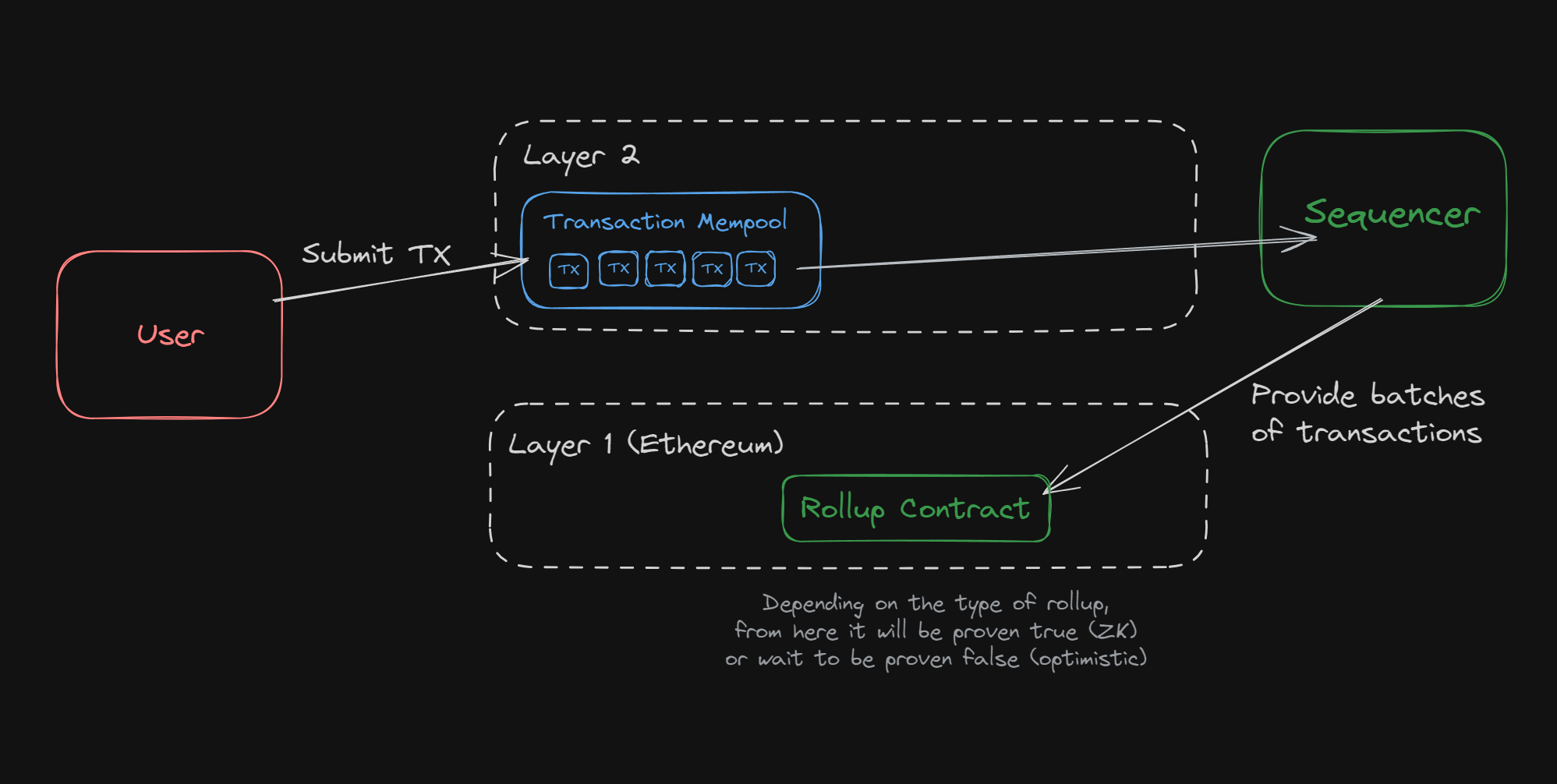
Traditional setups tie each rollup to a primary sequencer, often controlled by the rollup’s team or a trusted provider. This convenience comes at a cost. Censorship vulnerability looms large; a malicious or compromised sequencer can reorder, withhold, or exclude transactions, eroding user trust. Moreover, liquidity splinters across chains, forcing users into costly cross-rollup transfers. Data from recent analyses, like those highlighting Tanssi’s decentralized pool, underscores how most L2s still rely on these heartbeat-like sequencers prone to centralization. In a market where ETH hovers at $2,253.69, such flaws could deter institutional inflows seeking robust infra.
Fragmentation also hampers composability. Developers building dApps can’t assume atomic execution across rollups without shared ordering, leading to clunky workarounds. Projects like Maven 11 describe a shared sequencer set as the antidote: a network aggregating transactions from multiple rollups, ordering them collectively before dispatch. This model, echoed in Alchemy’s 2025 list of top shared sequencers, promises neutrality and resilience, drawing from independent networks unbound to any single chain.
Demystifying Multi-Sequencer Assignments in Shared Pools
At the core of shared sequencer pools lies the elegance of multi-sequencer assignments, where duties rotate deterministically among participants. Think deterministic sequencer rotation: slots assigned via stake-weighted mechanisms or BFT consensus, ensuring fair access without collusion risks. Transactions flood into the pool from various rollups, sequencers propose orders, consensus locks in the sequence, and it’s broadcast back. Tools like warp-sync sequencers accelerate this, syncing states rapidly for low-latency execution.
Ethereum (ETH) Price Prediction 2027-2032
Predictions factoring shared sequencer adoption impacts on L2 scalability and interoperability from 2026 baseline of $2,254
| Year | Minimum Price | Average Price | Maximum Price | Avg YoY % Change |
|---|---|---|---|---|
| 2027 | $2,800 | $5,000 | $8,000 | +122% |
| 2028 | $4,000 | $7,500 | $12,000 | +50% |
| 2029 | $5,500 | $11,000 | $18,000 | +47% |
| 2030 | $7,000 | $15,000 | $25,000 | +36% |
| 2031 | $10,000 | $22,000 | $35,000 | +47% |
| 2032 | $13,000 | $30,000 | $45,000 | +36% |
Price Prediction Summary
Shared sequencer pools like Espresso, Astria, and Radius are set to revolutionize Ethereum rollups by enabling decentralized transaction ordering and atomic composability, driving scalability and adoption. ETH prices are projected to grow progressively, with averages compounding at 40-50% annually in bull phases, reaching $30,000 by 2032 amid favorable market cycles, while mins/maxes account for bearish corrections and hyper-bullish surges.
Key Factors Affecting Ethereum Price
- Widespread shared sequencer adoption (Espresso, Astria, Radius) boosting L2 interoperability and censorship resistance
- Enhanced Ethereum scalability reducing fees and enabling mass adoption
- Crypto market cycles aligned with Bitcoin halvings and institutional inflows
- Regulatory developments favoring decentralized infrastructure
- Technological advancements in ZK proofs and modular rollups
- Macroeconomic trends, competition from Solana/L2 rivals, and ETH ETF/staking yields
Disclaimer: Cryptocurrency price predictions are speculative and based on current market analysis.
Actual prices may vary significantly due to market volatility, regulatory changes, and other factors.
Always do your own research before making investment decisions.
This rotation isn’t random; it’s engineered for security. Radius, for instance, leverages proof-of-stake slots where higher stakes yield more assignments, aligning incentives with network health. Espresso adds cross-rollup fee auctions, letting rollups bid for priority in a neutral arena. Astria’s Tendermint backbone ensures finality, making it a plug-and-play for Rollup-as-a-Service. As Jarrod Watts notes in his sequencer guide, these networks decentralize the coordination layer rollups desperately need, rebuilding bridges through shared sequencing.
Spotlight on Trailblazing Shared Sequencer Networks
Three frontrunners dominate the Ethereum rollups sequencers space: Espresso, Astria, and Radius. Espresso’s decentralized hotshot sequencer delivers fast finality and interoperability without shared settlement, potentially partnering with stables like USDC for trustless flows. Astria modularizes data availability and ordering, easing rollup deployment while maintaining sovereignty. Radius stakes its claim with efficient L2 message handling, proving shared models enhance performance sans decentralization trade-offs.
Zeeve’s insights affirm: shared sequencing bolsters security, speed, and cost without compromises. Cube Exchange simplifies it as an independent service scheduling transactions across chains, a principle expanding sequencers’ roles per CryptoEQ. Uplatz videos rally the industry around this coordination layer, hinting at universal atomic composability on the horizon.
Delving deeper into multi-sequencer assignments, these mechanisms ensure equitable distribution of sequencing slots within the pool. Operators stake tokens or reputation to bid for turns, with algorithms like stake-weighted voting determining winners. This deterministic sequencer rotation prevents monopolies, as each cycle refreshes leadership based on verifiable commitments. For rollups, it means predictable latency; transactions enter a unified mempool, get sequenced globally, and return ordered for local proofing. Innovations like warp-sync sequencers further optimize by compressing historical states, allowing new sequencers to bootstrap in seconds rather than hours.
Benefits and Trade-offs of Shared Sequencer Adoption
Comparison of Espresso, Astria, and Radius: Shared Sequencers for Ethereum Rollups
| Project | Consensus Mechanism | Key Features | Strengths for Ethereum Rollups | Maturity Level |
|---|---|---|---|---|
| Espresso | Decentralized BFT (HotShot-inspired) | Fast finality ✅, Cross-rollup fee auctions ✅ | Improves interoperability, neutrality, censorship resistance, and atomic composability | Emerging (Testnet pilots live) |
| Astria | Tendermint BFT | Modular data availability ordering, Rollup-as-a-Service (RaaS) | Easier deployment and management of rollups, enhanced scalability | Emerging (Mainnet beta) |
| Radius | Proof-of-Stake (PoS) | Stake-weighted PoS slots ✅, L2 message ordering | Enhanced security and efficiency in transaction sequencing | Emerging (Early testnet) |
From my vantage as a fundamental analyst, the true value emerges in risk-adjusted returns for infra plays. Shared pools slash operational costs by amortizing node expenses across rollups, potentially boosting ETH’s L2 throughput amid its current $2,253.69 price point. Yet, challenges persist: governance wars over slot allocation could fragment consensus, and liveness faults might cascade if too many sequencers falter. Projects counter this with slashing penalties and redundancy, as seen in Tanssi’s pool unpacked by KuCoin analysts. Still, in a down 1.04% market dipping to $2,115.33 intraday, these networks offer undervalued hedges against rollup centralization.
Interoperability shines brightest here. 1kx research posits trustless rollup bridges via shared ordering, even sans shared settlement; imagine USDC flows atomic across chains without custodians. Uplatz frames it as the coordination layer rollups crave, dismantling silos. LimeChain and Zeeve concur: decentralization holds without sacrificing speed or cost, a rare win in L2 economics.
Key Advantages of Shared Sequencer Pools
-
Censorship Resistance: Decentralized pools distribute transaction ordering across multiple nodes, reducing risks from single sequencer control as seen in projects like Espresso and Astria.
-
Atomic Composability: Enables synchronized, bridge-free interactions between rollups for seamless cross-chain applications and universal liquidity.
-
Cost Efficiency: Shared infrastructure lowers operational expenses for rollups by pooling sequencer resources and optimizing transaction batching.
-

Enhanced Security via Rotation: Dynamic sequencer assignments and stake-weighted slots, like in Radius, prevent attacks by rotating duties regularly.
-
Liquidity Unification: Aggregates liquidity across rollups, boosting capital efficiency and enabling atomic swaps without fragmentation.
Navigating Participation: Strategies for Rollup Operators
For dApp devs and operators eyeing sequencer markets, start with auctions. Platforms like Sequencer Marketplaces host bids for slots, where you stake ETH or pool tokens for assignments. Monitor metrics: slot win rates, finality times under 1 second, and MEV capture shares. My medium-risk lens favors Espresso for its auction neutrality, ideal if ETH stabilizes above $2,253.69. Pair with RaaS from Alchemy’s listings to deploy rollups swiftly.
Operators should audit pool diversity; aim for 100 and nodes to dilute risks. Simulate failures using testnets, ensuring warp-sync resilience. As Ethereum rollups proliferate, pools with proven uptime will command premiums, elevating staked yields. CryptoEQ questions if they ‘fix’ rollups; I say they mature them, fostering a lattice of composable chains.
Looking ahead, expect hybrid models blending shared pools with app-specific sequencers for niche optimizations. With ETH’s 24-hour high at $2,328.65 underscoring volatility, shared infra fortifies the base layer’s economic moat. Rollup teams ignoring this risk obsolescence; those embracing it unlock scalability’s full promise, drawing capital in waves.
About the Author